
Words Vidula KotianDate 05 December 2025
Our latest Further report, The Passion Principle, names this shift. Hospitality is no longer about what a guest consumes; it’s about what host and traveler co-create. Places are becoming more porous, more participatory—inviting guests to step into local rhythms, to notice the hands that shape a meal, the materials that hold a building, the rituals that give a community its form. As our Managing Director, Stijn Oyen, reminds us, “great hospitality is not just delivered, it’s co-authored”—and in that co-authorship, meaning and beauty emerge.
The nine destinations on this year’s list share that spirit. They aren’t simply stunning or emerging or newly transformational—though many are all three. They are places where you can feel the world shifting under your feet: islands reclaiming ecological heritage, cities redesigning public life, wine regions redefining identity, and creative communities rewriting the relationship between tradition and innovation. They are destinations that invite you to leave a mark—through participation, curiosity, friction, and surprise.


Medellín has become a laboratory for how cities can shape wellbeing. In Ruta N, biotech startups and health-innovation labs sit beside cafés where researchers, chefs, and creatives cross paths — proof that the city’s future is being built in real time. That curiosity extends to its food culture. Restaurants like ElCielo (Colombia’s first Michelin-starred export), Ocio, and Carmen explore fermentation, neurogastronomy, and Colombia’s biodiverse ingredients, turning dining into a study of energy, texture, and recovery.
Wake BioHotel, the region’s first bio-optimization hotel, embodies this ethos. Rooms use circadian lighting, infrared technology, and air-and-water purification to support sleep and recovery, while the Sastra Longevity Center offers diagnostics and performance treatments usually found in clinics. Wake II expands the concept into residences, social spaces, and nutrition-forward dining designed around longevity.
“We want to take wellness to the next level, developing an AI Coach that, after measuring your biomarkers at Sastra, can personalize your Wake experience,” says David Lujan, the driving force behind Wake. “From nutrition at Silo to movement and sleep habits—it’s ambitious, but it aligns with our purpose: to bring well-being to people through hospitality, empowering them through technology and artificial intelligence.”

Wake BioHotel blends cutting-edge science with holistic wellness for optimal health

Medellín is entering a new era —creative, conscious, and rooted in well-being
David Lujan, the Original behind Wake BioHotel

Silo serves wholesome dishes crafted from locally sourced, sustainable ingredients


Infrared sauna at Wake for detoxification and immune support
Costa Rica is redefining travel in Central America. Beyond its iconic beaches and rainforests, the country has become a hub for wellness, sustainability, and cultural immersion. In San José, culinary labs and boutique wellness centers pair Costa Rican superfoods with science-backed nutrition, while coffee cooperatives and conservation projects invite visitors to engage directly with ecosystems—from reforestation programs to cloud-forest biodiversity research.
On the Nicoya Peninsula, Nosara exemplifies this new wave. “In this Blue Zone, luxury is found in how you feel. You walk barefoot, breathe the jungle, listen to the ocean… and realize that the greatest luxury is returning to yourself,” says Jaime Bravo, whose vision guides Esh Hotel. Its design fuses clean minimalism with local craftsmanship, letting natural textures, light, and ocean breezes flow through every room. Yoga at dawn, surfing, and nutrition-focused dining turn wellness into an effortless, immersive rhythm.
In Monteverde, Hotel Belmar blends cloud-forest immersion with creativity. Its Artist Residency invites creators to work alongside guests, drawing inspiration from the forest while fostering cultural exchange and ecological awareness. Guided hikes, farm-to-table cuisine, and thoughtfully designed spaces make the region’s ecology immediate and alive.


A tiny, laid-back surf town, Nosara offers world-class waves and a tight-knit surf community

Hotel Belmar’s rooms combine alpine architecture and Costa Rican flair, framed by the cloud forest


Miami Beach thrums with energy—sunlit Art Deco façades, Wynwood’s riot of murals, and Little Havana’s vibrant streets create a city alive with creativity and reinvention. Civic projects like upgraded promenades and the ReefLine, an underwater art and coral restoration initiative, make Miami a place where design, culture, and ecology intersect.
Along six blocks of Collins Avenue, where the city’s first beachfront hotels emerged in the late 1930s, the neighborhood is experiencing a significant reinvention. “The Shelborne By Proper leans into that moment, shaping a modern, understated take on luxury within the hotel’s original Art Deco frame,” says Brian De Lowe, co-founder of Proper Hospitality, known for redefining the hospitality scene on the West Coast. Its terraces, wellness rituals, locally inspired art and dining, and Proper Presents—cultural talks and wellness panels—bring the energy of Miami’s streets and sea to life.

The Shelborne’s design fuses Miami’s architectural heritage with modern tropical style

The iconic pool, still showcasing its Art Deco-era diving platform

Sun, sand, and Miami Beach vibes, photo courtesy Marcus Lenk, Unsplash

Stretching above Lake Geneva in gentle, terraced waves, Lavaux is a landscape shaped by care—first by glaciers, then by monks, and now by a community devoted to preserving one of Europe’s most poetic wine regions. The UNESCO-listed vineyards have always been protected, but 2026 feels like it will be a particularly meaningful moment: international experts will gather to celebrate mountain winegrowing; new sustainable-mobility efforts are reshaping how visitors navigate the narrow lakeside roads; and projects like Pierre de Vigne are renewing attention on the living heritage of these stone-walled terraces.
Amid this rare calm, Le Clay, opening in late 2026, slips naturally into the slope above Puidoux. It follows Lavaux’s rhythm, with architecture that yields to the hillside, interiors shaped by a soft, grounded palette, and menus and rituals drawn from the local terroir. It’s built around how guests want to feel—energized, unburdened, attentive.
Here, days unfold on vineyard paths warmed by the region’s famous “three suns,” or through quiet villages where winegrowers open their doors to Chasselas tastings that echo centuries of tradition. The lake mirrors the sky, the light feels unusually clear, and every route—by foot, train, or boat—seems designed for unhurried discovery.


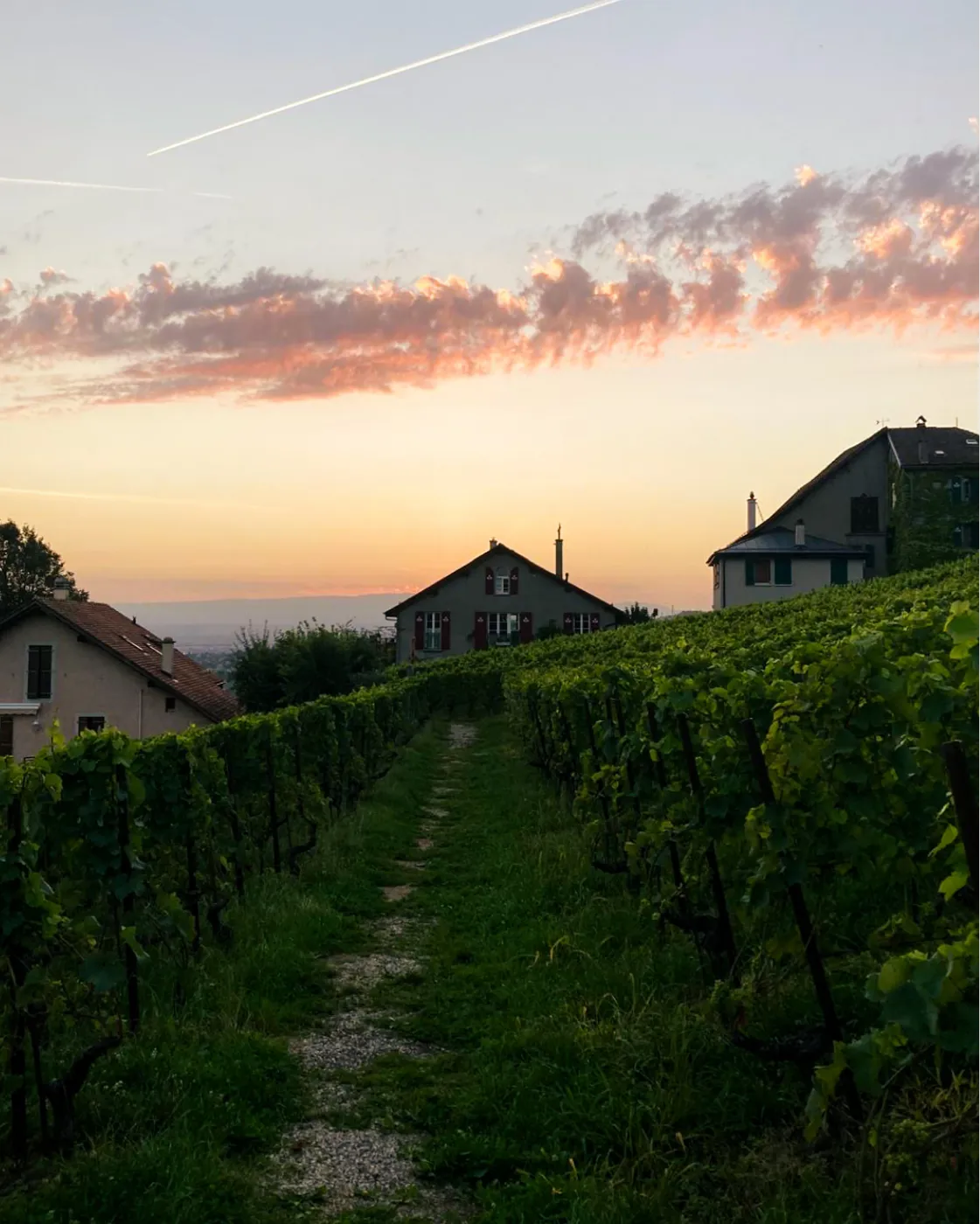
The French-speaking town of Puidoux, photo courtesy Elian Ruiz, Unsplash
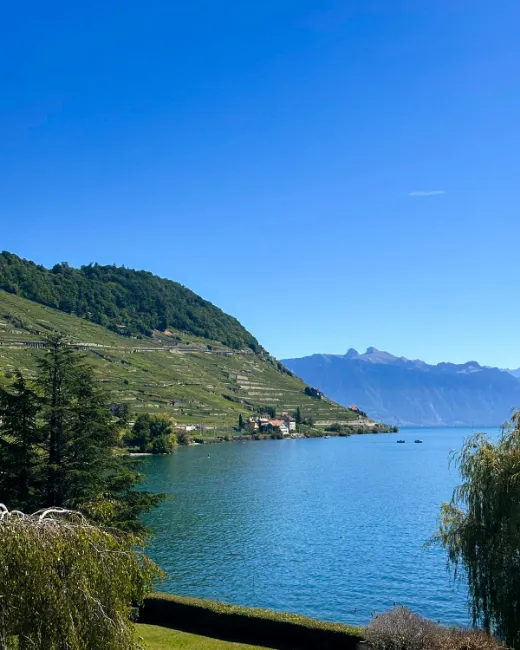
Le Clay offers uninterrupted views of Lake Geneva
Off Madagascar’s northeast coast, Sainte-Marie glows in soft, luminous light—mornings brushed with lagoon mist, afternoons stirred by palms swaying over turquoise water. For generations, islanders have lived in harmony with the land and sea, cultivating vanilla, fishing sustainably, and safeguarding reefs and forests. Today, those traditions are joined by organized conservation efforts, from coral restoration to whale monitoring.
On its shoreline, Voaara embodies the vision of Philippe Kjellgren, who spent his teenage years in Madagascar and holidayed on Sainte-Marie. After staying in over 2,000 hotels worldwide, he dreamed of a retreat rooted in simplicity and respect. “This place felt sacred,” he says. Its name is drawn from Malagasy: voarara (forbidden or sacred) and voara (nature or fruit). A portion of the resort’s profits and service fees support reforestation, wildlife reintroduction, and local schools and clinics.
Sainte-Marie invites you to kayak through mangroves, snorkel above kaleidoscopic coral gardens, watch humpback whales breach offshore, or trace pirate history along quiet trails.

Set on 100 acres of lush beachfront and jungle, Voaara mirrors the layout and spirit of a traditional Madagascan village


In Shanghai, layered history meets forward‑leaning ambition. Along the Huangpu River and Suzhou Creek, a bold 10-year urban plan is transforming the waterfront: new parks, elevated walkways, cycling paths, and public art stages are reshaping once-neglected banks into teeming public space. The “Artistic Suzhou Creek” initiative is at the heart of this revival, with art institutions in Jing’an District—like UCCA Edge, Fotografiska, and Suhe Haus—anchoring a cultural corridor that pulses with exhibitions, performance, and community engagement.
In creative neighborhoods like M50—formerly industrial lofts on Moganshan Road—more than 100 artist studios now brim with innovation. Nearby, renovated Shikumen alleys in Tianzifang house design boutiques, cafés, and craft ateliers, turning the old city fabric into an immersive creative ecosystem.
The soon-to-open Habo Shanghai occupies a century-old European-style building in Huangpu, reflecting the city's cultural pulse. Art Deco curves complement minimalist Eastern design, while the rooftop terrace and Violin Lane bar host live music, readings, and curated programming. A “literary residence” combining humanistic art with intelligent technology, Habo offers smart housekeeping and a book-lined ambiance framed by skyline views.


Warm earth tones and rich textures bring Habo Shanghai’s historic architecture to life
India’s wine scene is flourishing, with new vineyards and boutique estates turning regions like Maharashtra into destinations in their own right. Small-batch wines, tasting tours, and artisanal cellars are drawing travelers who want to discover the craft behind each bottle. Daund, on the quieter edge of Pune, is the kind of landscape you only grasp by being in it—wide skies, slow afternoons, and vineyards that seem to settle the mind. Come here for a gentler pace, for mornings when the light drifts over the fields and evenings that soften into deep, wine-colored quiet.
At the heart of this stretch of countryside sits Hotel Irada, Pune Wine Country a restored estate that carries an air of thoughtful calm. Its rooms open to vineyard views; its terraces catch the kind of late sun that makes you linger. Guests wander through vine rows, taste young wines in cool barrel rooms, cycle along quiet paths, or unwind with yoga, Ayurvedic treatments, and hot-plunge soaks. Evenings gather around conversation, a good pour, and the sense that time has stretched a little.

Hotel Irada rises as a grand neo-classical structure in the heart of a 66-acre working winery


Tucked into the Japanese Alps, Matsumoto in Nagano Prefecture feels like a quiet revelation—a place where centuries-old craft pulses with renewed life. Historic streets and kura (traditional storehouses) now host galleries, artisan shops, and studios, showcasing lacquerware, bamboo, and Shinshu tsumugi silk that marry generational skill with modern creativity.
Matsumoto is quietly reinventing itself. The festival calendar and public art, from seasonal lanterns along Omotesando to outdoor sculpture, blur the line between tradition and experimentation. At the heart of this creative regeneration is Matsumoto Jujo, a revitalized 17th-century inn transformed into two boutique hotels, cafés, a bookstore, and a cider brewery. Its restaurant celebrates Nagano’s terroir through local, fermented ingredients—miso made from buckwheat, cider crafted from local apples—and pays homage to regional foodways.
Walking through Matsumoto, from artisan workshops to ryokans fed by mountain springs, feels like a city in motion, grounded in heritage yet redefining itself one artful detail at a time.


Venice reveals itself in layers—of history, craft, and light. Beyond the familiar canals and bridges, its neighborhoods pulse with life often overlooked: artisan workshops, quiet courtyards, and streets tracing centuries of stories. Experiencing the city consciously means seeking these hidden rhythms—choosing small cafés over crowded piazzas, tracing winding canals, and supporting local craftspeople. It’s in these quieter choices that the city’s soul reveals itself—a delicate balance of memory, beauty, and discovery that lingers long after you leave.
In Cannaregio, opening next spring, Elizabeth Unique Venice transforms this experience into a living space. The Pianca residence, reimagined by Cristina Celestino Studio, weaves past and present through a layering of colors, materials, and furnishings. Objects from local artisans sit alongside bespoke designs, forming a distinct dialogue with Venetian tradition. “Venice is not just a city: it is an emotion suspended above the water. In this delicate and precious setting, our desire was born—to create a refuge where warmth and intimacy take center stage,” says Vittorio Curatella, one of the visionaries behind the hotel.


 Profile
 Bookings
 Benefits
 Bookmarks
 Exclusive Community Deal