
Words Karin NovozamskyImages Michal Rzepecki
Here, they sprawl wild and abundant. The farm dogs, Greta and Uma, weave around us seeking attention while hummingbirds dart between flowers overhead. This is my first taste of Costa Rica—a country I’ll come to know through its forests, coastlines, and the philosophy of pura vida over the next five days.
The farm, Finca Las Colinas, belongs to our host’s family, passed down from his grandfather who bought it. Walking among the coffee plants, we learn about pruning rhythms and harvest cycles. The coffee cherry surprises me with its sweetness when we taste it straight from the branch, before extracting the pale beans inside. Only after drying and peeling away another thin layer will these be ready for roasting, transforming into the familiar brown beans that coffee-lovers recognize—and developing their characteristic taste.

Hotel Belmar sits in Monteverde, a village in Costa Rica’s mountainous northwest where breakfast views stretch across emerald valleys to the Gulf of Nicoya, shimmering in the distance. Birds I’ve never seen before cross the frame—flashes of color against the green. The hotel is family-run, and when Doña Vera Zeledón who founded Hotel Belmar handed operations to her children, she followed her own passion for nature by founding a farm where cheese is produced, animals live a good life, and plants are grown in a circular ecosystem—and where her grandchildren grow up riding donkeys and horses, milking cows, and learning exactly where the food they eat comes from.
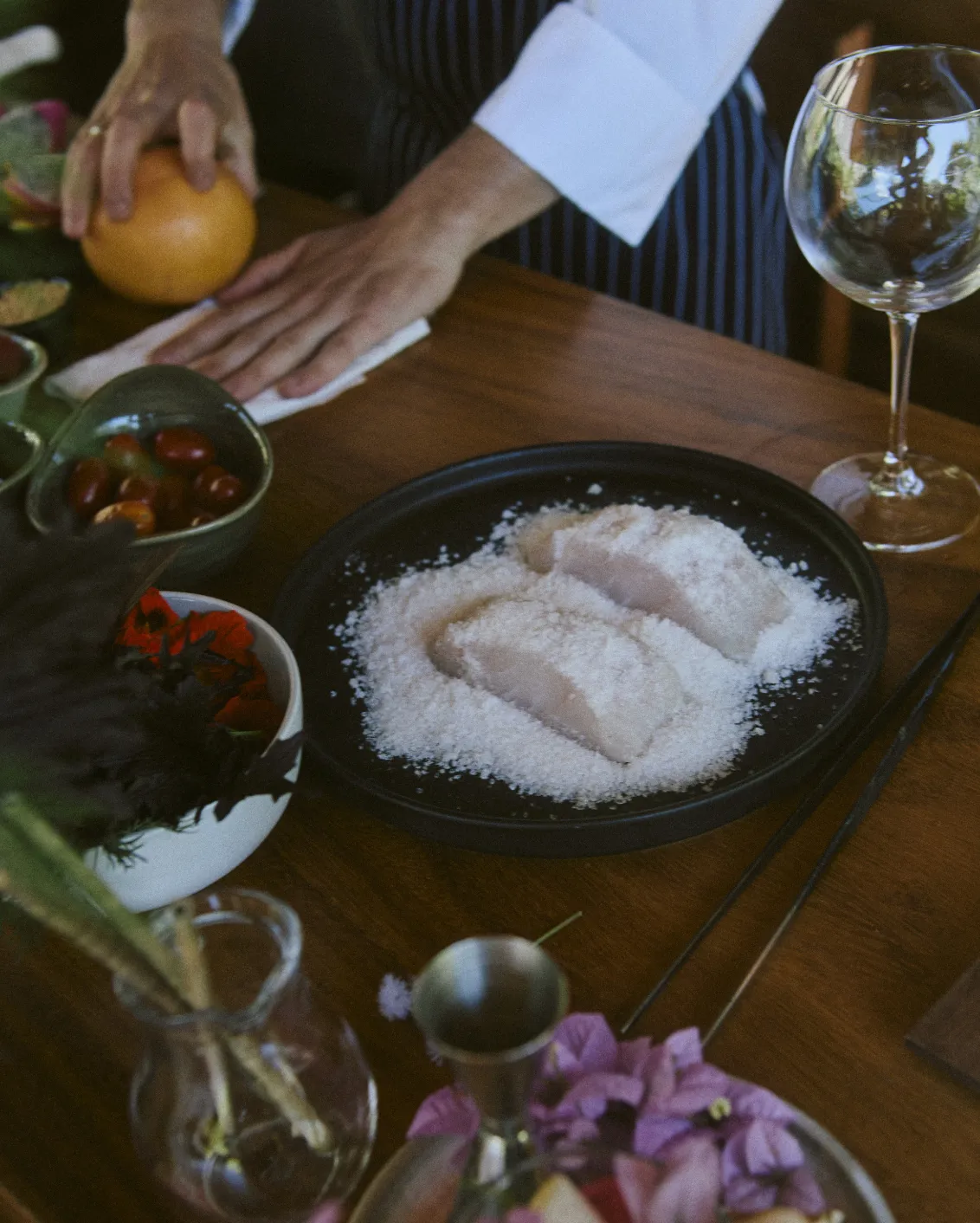
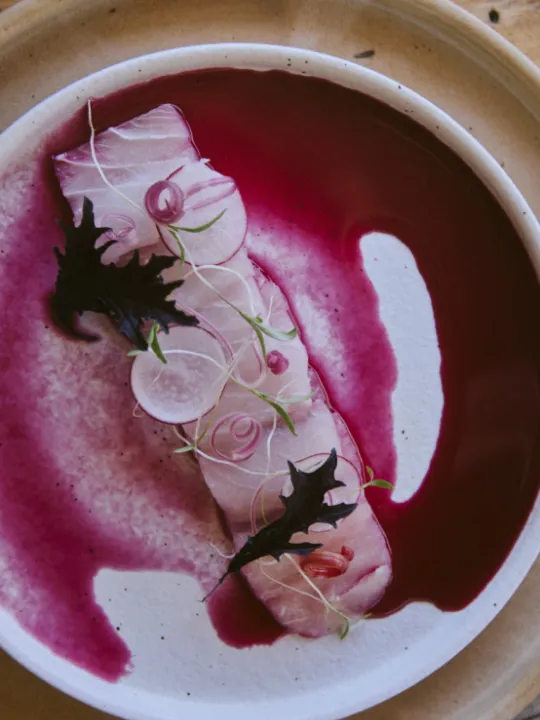
Fresh ingredients and thoughtful preparation are key in the cuisine of the Blue Zone
We visit Finca Madre Tierra farm on our second day. I milk a cow, which I haven’t done since my childhood days, meet the cheesemaker whose products go directly to the hotel’s kitchen, and encounter a newborn sheep, barely a day old, still wobbly beside his mother. While touring the gardens and the chicken run, we learn about the Círculos de Vida at the farm, which helps us understand how the sustainable agricultural practices and the low-impact farming complete the lifecycle of Hotel Belmar bringing its vision of sustainable tourism to life.
Back at Hotel Belmar, a garden-to-table lunch awaits. We collect fresh produce from the garden and experience how the young chef’s preparation adds layers to the flavors that follow. The richness of colors feeds our eyes; the sun feeds our skin, and the whole scene feels surreal.

Pedro Belmar, alongside his siblings, now runs the hotel—while his mother, the original founder, remains closely involved


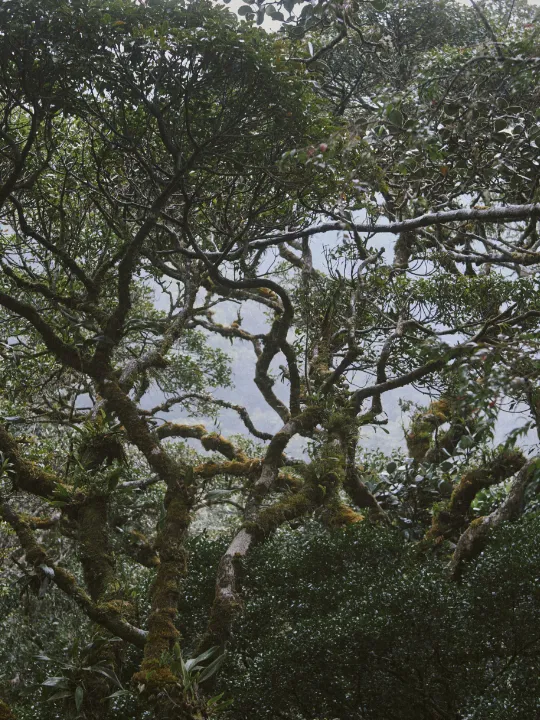
The next day, we venture into the cloud forest just above the hotel. Our guide, Andrés, the founder of Savia forest immersion, prepares us carefully for what lies ahead, explaining the microclimate where Caribbean winds meet those from the Pacific, creating conditions where plants grow on other plants so that every tree becomes its own ecosystem. Before crossing the hanging bridge that leads to a platform twenty meters above ground, we’re secured and briefed on every safety detail. The process and three other guides give us confidence to step onto the elevated bridge. Arriving on the platform, surrounded by trees that are hundreds of years old, we’re offered fruit, tea, coffee, and an incredible view that makes the height feel worth every careful step. After descending back to the forest floor, we continue along the perfectly constructed trail until reaching its exit.
Before leaving for the coast with some hours of driving ahead of us, we head to the hotel’s brewery to enjoy the last moments at this special place with live music and some final conversations. The brewery is open to locals, and tonight it’s busy with guests from the village, the atmosphere warm with conversation and the easy pleasure of good beer.
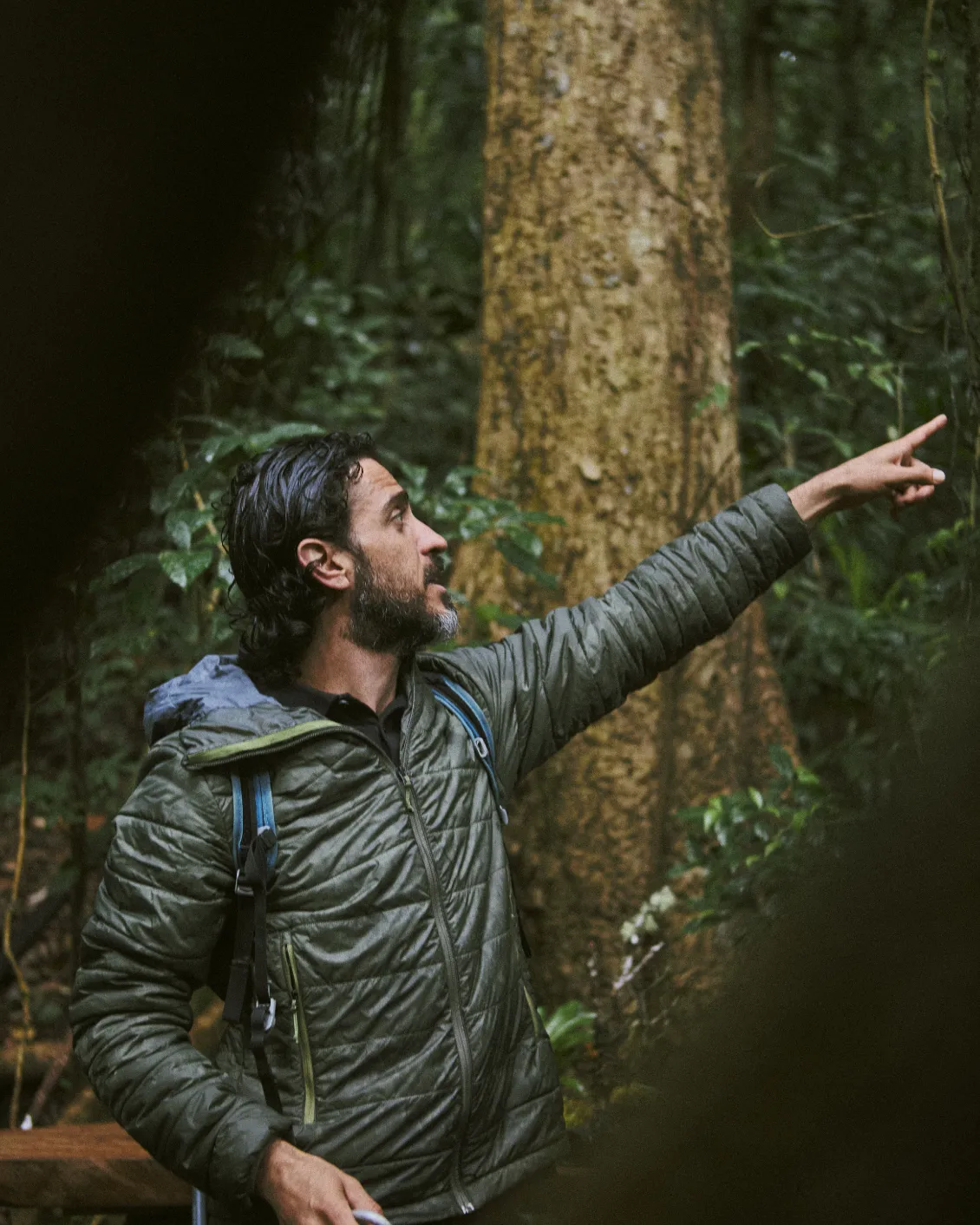
Andrés Valverde, the founder of Savia Forest Immersion, knows his trees and how to approach them


This story appears in the March issue of Directions magazine. Reimagined for 2026, the magazine is now in a broadsheet format, designed for you to fold, toss in your bag, and carry home with you. Visit one of our hotels around the world to pick up your copy.

At Esh Hotel & Spa in Nosara, warmth greets us—literally. Esh means fire, and fire brings transformation, guests are invited to be intentional and aware of the transformation that is happening. As a reminder, fires burn throughout the brutalist wabi-wabi space—in the lobby, in the pool, and in the garden. The restaurant wraps around the pool like an invitation to linger. Sunday mornings here have their own rhythm: at 11 am, a DJ takes over, accompanying guests and visitors with easy tunes. Smooth vibes and unhurried conversation carry us into the afternoon, when we drive to the beach for sunset.

A warm welcome at Esh Hotel & Spa from the owners Jaime & Miri

Watching the sun sink into the Pacific’s far horizon is something I can’t look away from. Like gazing at stars, these moments feel archaic, touching something deep about being human and part of something infinitely larger than ourselves.
The following day brings action. We visit Costas Verdes, a nonprofit that reforests and protects coastlines. After learning about their work, each of us grabs a seedling and walks to the coastline to plant our tree. I write a message on the tag—a reason to return, to check on this small life we’ve placed in Costa Rican soil.
Shortly after, I find myself wearing a rashguard, listening to my surf instructor Eki. She is the founder of Mamawata Surf Retreat for women and knows how to make surfing look effortless, breaking down the process into simple, memorable steps that even I can recall when the wave is approaching. Then suddenly and to my surprise, I’m riding a wave. It’s one of the greatest feelings I’ve had in a long time, and I know I’ll come back for this.


Almar, the hotel’s restaurant, awaiting its guests
Lunch is at a spot where fishermen’s houses sit right behind the beach, in an area normally protected from development. It’s the kind of place someone who knows has to show you. We’re hungry from the morning's adventures, grateful for the traditional plate of beans, rice, salad, and fresh fish.
That evening, after rest, we’re invited to a cacao ceremony followed by a sound bath that leaves us simultaneously relaxed and energized. We set intentions for the year ahead, writing them down before releasing the notes to a crackling fire. Gathering around a fireplace always calms me, which made this spot perfect for the cacao ceremony and intention setting. We leave the sound bath with our gaze turned inward.

Eki Altmann, the founder of Mamawata Surf Retreat, preparing our boards for the day


Our final dinner at the hotel’s restaurant, Almar—which blends the words for soul and sea—is crisp wine, delicious food bringing the soul of the sea to our plates, and the kind of deep conversation that only emerges when people have shared experiences together. We head to bed early—our pickup for San José’s airport is at 5 am, and our flight leaves at noon.
The last days were typical Esh days. Time to turn inward as well as action, learning, growth, and enjoying life.
We’ve experienced so many different moments, gathered so many insights. Above all, I was struck by the connection to nature, the knowledge about animals and plants, and the pride that comes with this knowledge and the beauty that surrounds the people. The generous minds who shared their ideas and invited us to walk some steps of their paths with them, letting us participate and sense how life feels in this beautiful country. As the plane lifts off, I feel nourished, full of memories that will need time to digest and integrate. But I already know I’ll return. The trees we planted are growing, the waves are still breaking, and Costa Rica has more to teach me about what pura vida really means.


 Profile
 Bookings
 Benefits
 Bookmarks
 Exclusive Community Deal